
Move One Relocations Insider | Poland Immigration 2026: Planning for Immigration Timelines with Confidence

Overview:
Poland continues to be a key destination for international talent, supporting business growth across multiple sectors. As application volumes increase, employers are placing greater focus on immigration planning to ensure recruitment, onboarding and mobility objectives remain aligned with business needs.
Recent data shows that residence permit processing times have increased across most Polish voivodeships, making advance planning increasingly important for employers relying on foreign talent.
Current Immigration Landscape
Residence permit processing timelines vary considerably across Poland and continue to be influenced by application volumes and regional caseloads.
Voivodeship | 2026 Average Residence Permit Processing Time |
Mazovia (Warsaw) | 394 days |
Pomerania (Gdańsk) | 598 days |
Silesia (Katowice) | 658 days |
Podlasie (Białystok) | 447 days |
Lesser Poland (Kraków) | 242 days |
Subcarpathia (Rzeszów) | 302 days |
Regions such as Mazovia (Warsaw), Pomerania (Gdańsk) and Silesia (Katowice) continue to manage some of the country's highest volumes of residence permit applications, contributing to extended processing timelines in these locations.
Residence permits are not the only immigration process affected by increased demand. Employers may also experience longer processing timelines for certain work permit-related procedures. In the first seven months of 2026, approximately 9.4 thousand work permits were issued, compared with 35.3 thousand during the first half of 2025, highlighting changing processing dynamics within the broader immigration system.
As work permits, visas and residence permits are separate procedures handled by different authorities, each stage should be considered independently when planning international assignments.
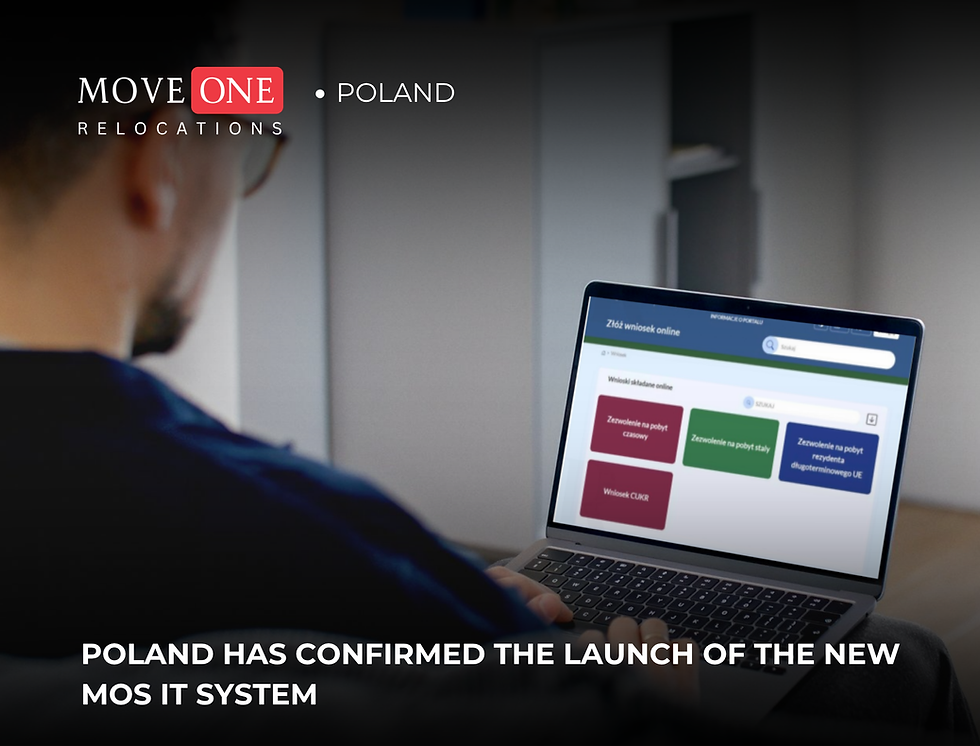
Poland has also continued its digital transformation through the introduction of the MOS 2.0 electronic immigration platform. While this represents an important modernization step, the organisations should continue to plan based on current processing realities as application volumes remain high in a number of regions.
What Employers Should Consider
For organisations hiring international employees, immigration planning has become an important component of workforce strategy.
Employers should consider:
Regional differences in residence permit processing timelines.
Early identification of immigration requirements during recruitment.
Realistic onboarding and deployment schedules.
Immigration assessments before assignment decisions are finalised.
Business continuity planning for roles dependent on immigration approvals.
Early preparation can significantly improve predictability and help organisations align mobility objectives with operational needs.
How Move One Supports Employers in Poland
Successfully relocating international employees often depends on identifying the most suitable immigration pathway from the outset. Every case is different, and decisions made early in the process can have a significant impact on overall timelines and employee experience.
Drawing on extensive experience across Poland, Move One takes a comprehensive approach to each case by carefully analysing the employee's profile, assignment scope, family circumstances, location, timing requirements and business objectives. By asking the right questions at the right stage, our specialists can identify compliant and practical immigration strategies tailored to each situation.
Our support includes:
Early immigration and relocation assessments.
Identification of the most suitable and efficient immigration pathways based on individual circumstances.
Guidance on potential timeline-optimization opportunities where available and compliant.
Strategic planning around regional processing conditions.
End-to-end case management and stakeholder coordination.
Support for employees and accompanying family members throughout the relocation process.
Ongoing advisory services to help employers make informed mobility decisions.
Because processing conditions can vary between locations and immigration categories, local knowledge remains essential. Through continuous market monitoring and extensive operational experience, Move One helps employers navigate complexity, reduce uncertainty and plan international mobility programs with greater confidence.
Supporting Workforce Mobility Through Preparation
While immigration timelines remain an important planning consideration, the organizations that engage early, understand regional requirements and leverage experienced immigration support are often best positioned to achieve successful outcomes.
Through practical guidance, local expertise and tailored immigration solutions, Move One continues to help clients across Poland compliantly relocate talent while supporting business continuity and workforce mobility objectives.
Need guidance?
Engage with Move One for tailored immigration and mobility support across Poland and the EMEA region.
Email: relo@moveoneinc.com


Comments